
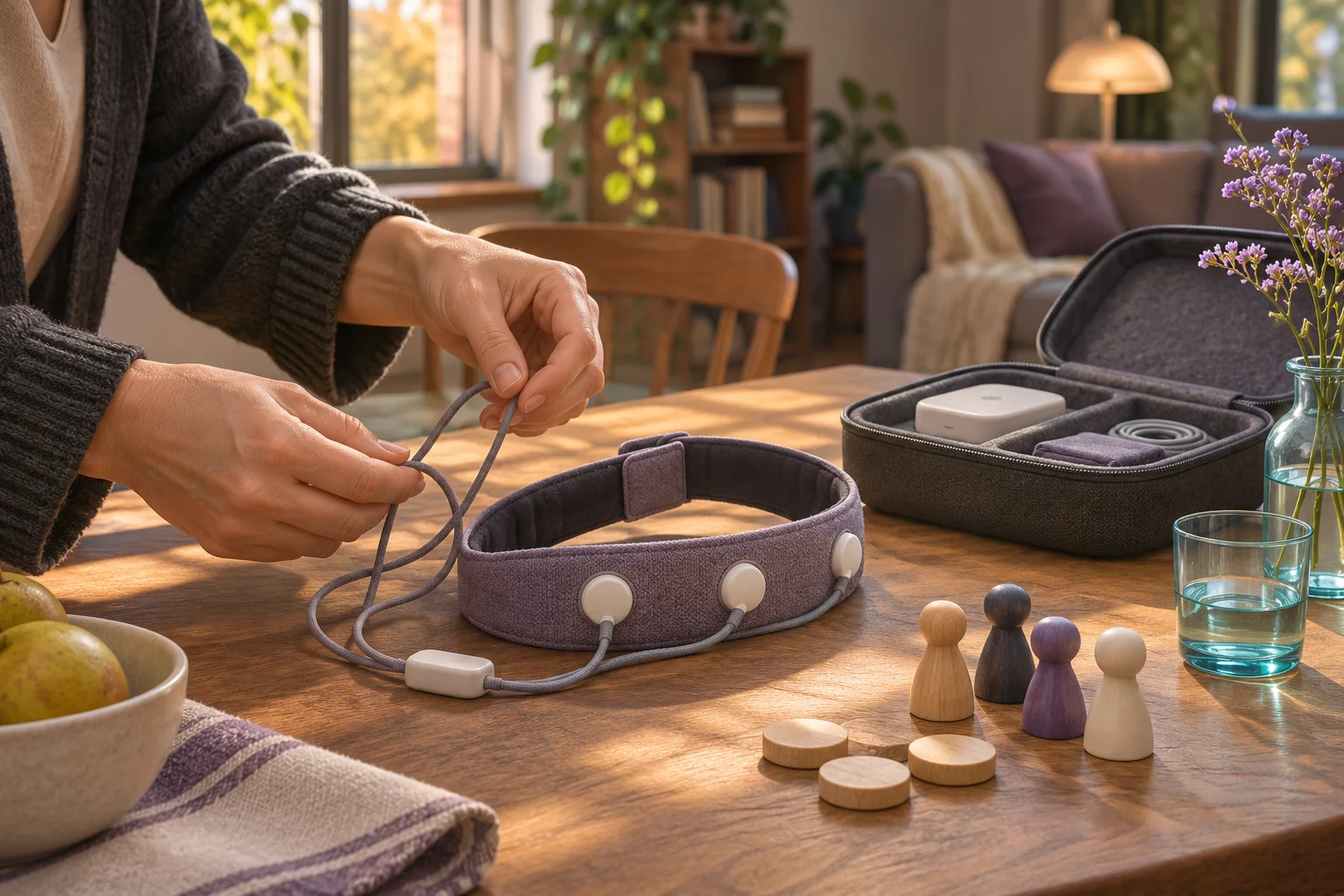
What travels home with the equipment
At Holland Bloorview Kids Rehabilitation Hospital in Toronto, children could take part in games and creative activities using a brain–computer interface (BCI), a system that turns patterns of brain activity into device commands. A 2026 study interviewed fifteen parents. Nine families had borrowed equipment. Parents described the pleasure of playing together, difficulties managing the equipment and a limited choice of activities at home. All nine described a decline in home use over time. Family interview study
A clinic lends the device for a reason. Families can choose a good time, include a sibling or try an activity again. Yet the clinic also supplies someone who knows how to fit the headset, an assortment of games and time set aside to use them. The headset fits in a bag. Those parts of the session take a separate arrangement.
A quiet headset tells us very little
Consider two possible evenings. On one, a child chooses a different game with a friend. On the other, the child wants to use the headset and the adult who usually sets it up is busy. Both evenings would produce the same entry in a usage log. The first may be an ordinary exercise of choice. The second may be a missed opportunity created by how the service was organised.
The Toronto interviews give the parents' account of that work. Children can have their own reasons for wanting company, abandoning a game or returning to it. A separate study asked children with physical disabilities and their parents about play and potential BCI uses. Asking a child what they wanted to play and asking an adult what it took to get started give a service different evidence. Study of children's and parents' perspectives
Design the loan around the afternoon
Imagine reviewing a loan with one family. Choosing the next game with the child might solve a problem that an extra training session would leave untouched. A supported session at a convenient time might free a parent to join in. Keeping the option to play at the clinic might matter most on a difficult week. A home programme can offer all three and learn which one the family actually wants. Whether the headset gets used more often is only part of the answer. What happened when everyone finally got to play is worth hearing, too.