
Across four consequential decisions over seven years, “Project Relay” always appeared under the same name. But its attachment has changed.
First it is a concept note. Later it is a research plan accompanied by prototype results. Then it becomes a clinical-investigation protocol with safety and reporting arrangements. Eventually it is a set of operating records: instructions, training evidence, software versions, support commitments, incidents, and corrective actions.
Relay is fictional, but deliberately ordinary. A university team proposes a non-invasive brain-computer interface for adults undergoing rehabilitation after a stroke. The system uses scalp-recorded electrical activity to estimate when a person is losing sustained attention during a computer-based exercise. Within limits set by a therapist, it adjusts the difficulty of the activity. Its intended use is as an adjunct in specialist clinics, not as a diagnosis or an autonomous treatment.
The familiar name makes Relay look like one object accumulating evidence on a path toward use. But each transition places a larger claim before a different authority and changes who may act and on what grounds. Earlier responsibilities do not simply disappear when new ones arrive. Some persist. Some transfer. Some expand. Others become enforceable for the first time.
This is how technological continuity can conceal institutional change. It is one possible clinical route, not a universal lifecycle: at any transition, Relay could narrow, return to research, change route, or stop.
A possibility
Relay begins as a short proposal written by two researchers. It contains an observation, a possible use, and an argument for why the idea deserves a closer look. A small foundation or university committee is not being asked to decide whether the system should enter clinical practice. It is deciding whether this possibility merits organized investigation.

At that point, the evidence can support only a modest claim. Signals associated with sustained attention may be detectable under controlled conditions, and a responsive exercise may be technically plausible. The concept note cannot yet show that Relay improves rehabilitation, works across clinics, or can be operated safely without the people who built it.
But even a bounded proposal creates responsibility. By naming adults recovering from stroke, a clinical setting, and a hoped-for benefit, the team has done more than describe a signal-processing problem. It has chosen whose needs will organize the research and what kind of success later evidence will be asked to demonstrate. The investigators now owe the next reviewers a clear boundary between observation and inference. The committee deciding whether to support the work becomes responsible for which uncertainty receives time, staff, and infrastructure.
In this fictional case, an early review with stroke survivors and therapists changes the concept note. Uninterrupted task time is no longer the sole endpoint; calibration burden and a tolerable session length become part of the benefit the project proposes to investigate.
The committee supports the proposal, but its decision is neither an endorsement of a product nor a neutral bet on scientific promise. It authorizes a particular question to become better resourced and more institutionally real. For Relay, that question is not “Can brain signals be decoded?” in the abstract. It is whether a specific decoding-and-adaptation arrangement might contribute to a bounded rehabilitation activity for a defined population.
The distinction is easy to lose because the project name survives the funding decision. The first responsibility is to keep the proposed benefit attached to the assumptions inside the proposal: who the system is for, where it might be used, what it will and will not do, and which uncertainty the next study is actually designed to reduce.
A bounded capability
Two years later, Relay’s attachment is no longer a concept note. The team is preparing a public-grant application and a detailed research plan. The change in genre matters. As one current Swiss example, the Swiss National Science Foundation’s requirements for a research plan ask applicants to describe the state of research, objectives and methods, risks and alternatives, roles and milestones, and the project’s scientific relevance and expected contribution. Those requirements belong to a particular funding system. Their wider significance is that a promising possibility has to become a plan that a public funder’s reviewers can compare and challenge. Their task is to assess whether this investigation merits support, not whether Relay belongs in clinical care.
Relay’s research plan fixes details that the concept note could leave open. It specifies the headset and signal-processing version, calibration procedure, rehabilitation task, participant criteria, comparison conditions, and outcomes. It separates technical detection performance from usability and from any later claim about clinical benefit. It states who can alter the prototype, who records deviations, and what result would count against the hypothesis.
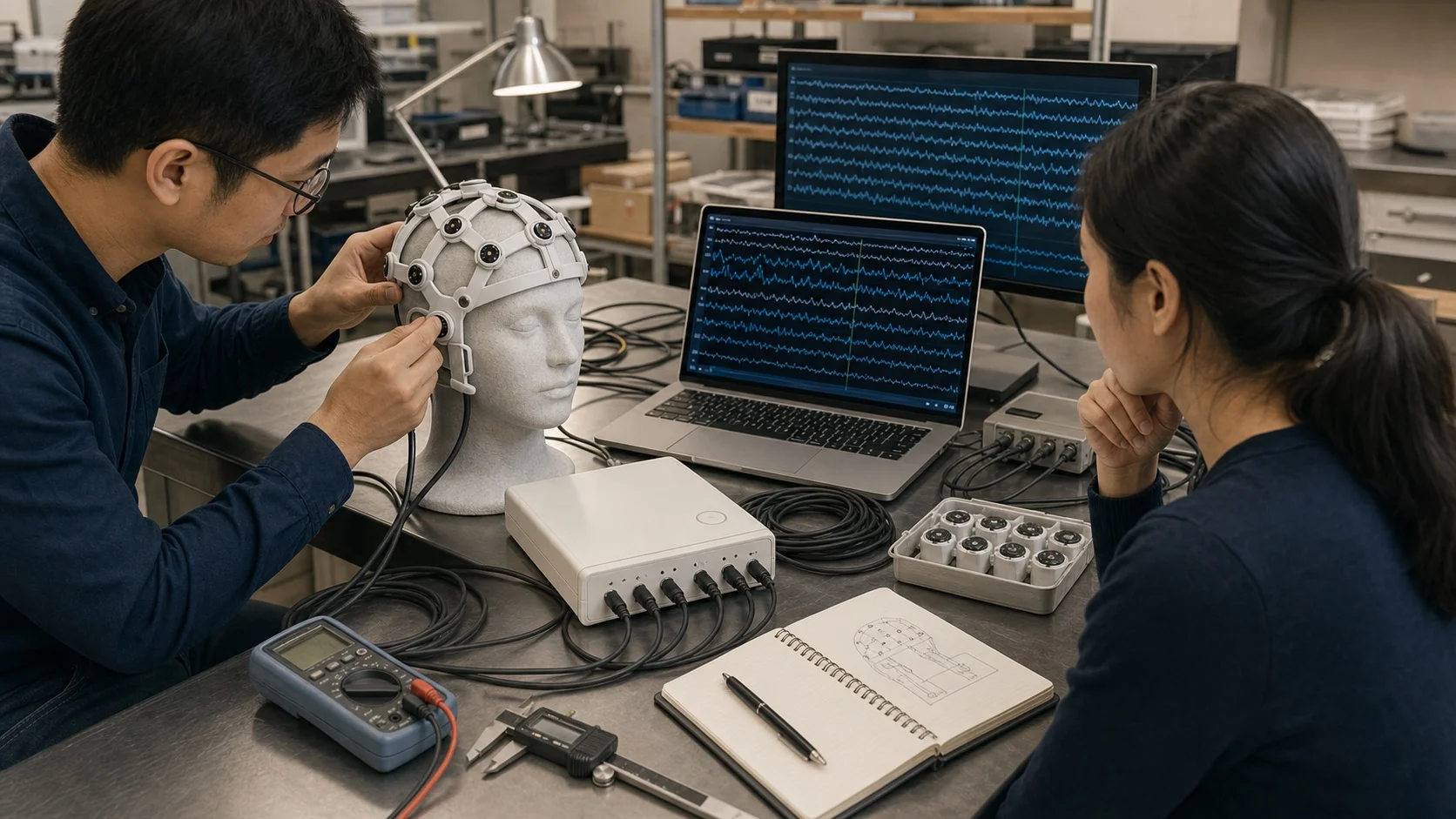
The funding body supports this bounded study. The work produces an encouraging result. But it comes with an inconvenient boundary. Relay detects attention lapses reliably enough when a trained technician positions the electrodes, runs an individual calibration, and supervises a short session. Performance becomes less stable after the cap is repositioned and when setup is transferred to staff who have not worked with the research team.
The unstable setup changes the claim. Relay has demonstrated a capability inside a specialist arrangement. It has not demonstrated a portable service for routine clinics, and it has certainly not demonstrated unsupervised use at home.
The tangible record must now include more than the best performance result. It includes the prototype version, calibration process, failed sessions, exclusions, setup conditions, error patterns, and the training on which the result depended. The manuscript has one audience, the next engineering team another, and a future clinical sponsor another still. Each needs enough of the boundary to understand what the evidence can bear.
The responsibility created here is durable: keep the claim attached to the arrangement that made it true. A later software release cannot inherit the result merely because it carries the Relay name. A clinic cannot inherit it if the calibration time has been removed from the workflow. A company formed to develop the prototype can acquire assets and obligations, but the university’s duty to report the study accurately does not pass away with a licence agreement.
Development often looks like an accumulation of positive evidence. Relay’s progress depends just as much on preserving the negative edge of the result. The failure under changed setup conditions narrows the next intended claim to supervised, individually calibrated use in specialist clinics. That narrower claim is less dramatic and more useful. It tells the next decision-makers what bounded investigation could responsibly be proposed and which parts of the system still need to be controlled.
Permission to expose people
When Relay reaches the clinical-investigation meeting, the attachment changes again. Prototype evidence is necessary, but it is no longer the decision object. The sponsor and investigators now produce a protocol describing a controlled arrangement involving people: what will happen, to whom, with which version, under whose authority, and with what safeguards, stopping rules, and reporting routes.
Jurisdiction now becomes operational rather than incidental. For this fictional Swiss pathway, assume the competent ethics committee categorizes Relay’s non-CE-marked device investigation as C2. Swissmedic’s current guidance describes Category C investigations as pre-market and says a C2 investigation may begin only after approvals from both Swissmedic and the responsible ethics committee, with applications sent to both on the same day. The Federal Office of Public Health explains that ethics applications are submitted through BASEC and points researchers to materials such as the protocol, participant information and consent form, and event-notification documents.
Those procedures are specific to the assumed category and jurisdiction. Their broader lesson is that Relay has become more than a device placed near a participant. It joins one device version to a sponsor, investigator, clinical site, trained staff, participant information, data access, and a safety and reporting plan.
“Human oversight” can no longer remain a sentence in the proposal. In Relay’s protocol, the therapist retains authority over rehabilitation decisions. The system may adjust an exercise only within a predefined range; it cannot change the treatment plan or present its attention estimate as a diagnosis. A researcher must review failed calibrations. The clinical team must know when fatigue, skin irritation, distress, unexpected output, or a device fault requires a pause. The sponsor must maintain the reporting route and decide how new safety information affects the investigation. Withdrawal from the study cannot mean withdrawal from ordinary rehabilitation.
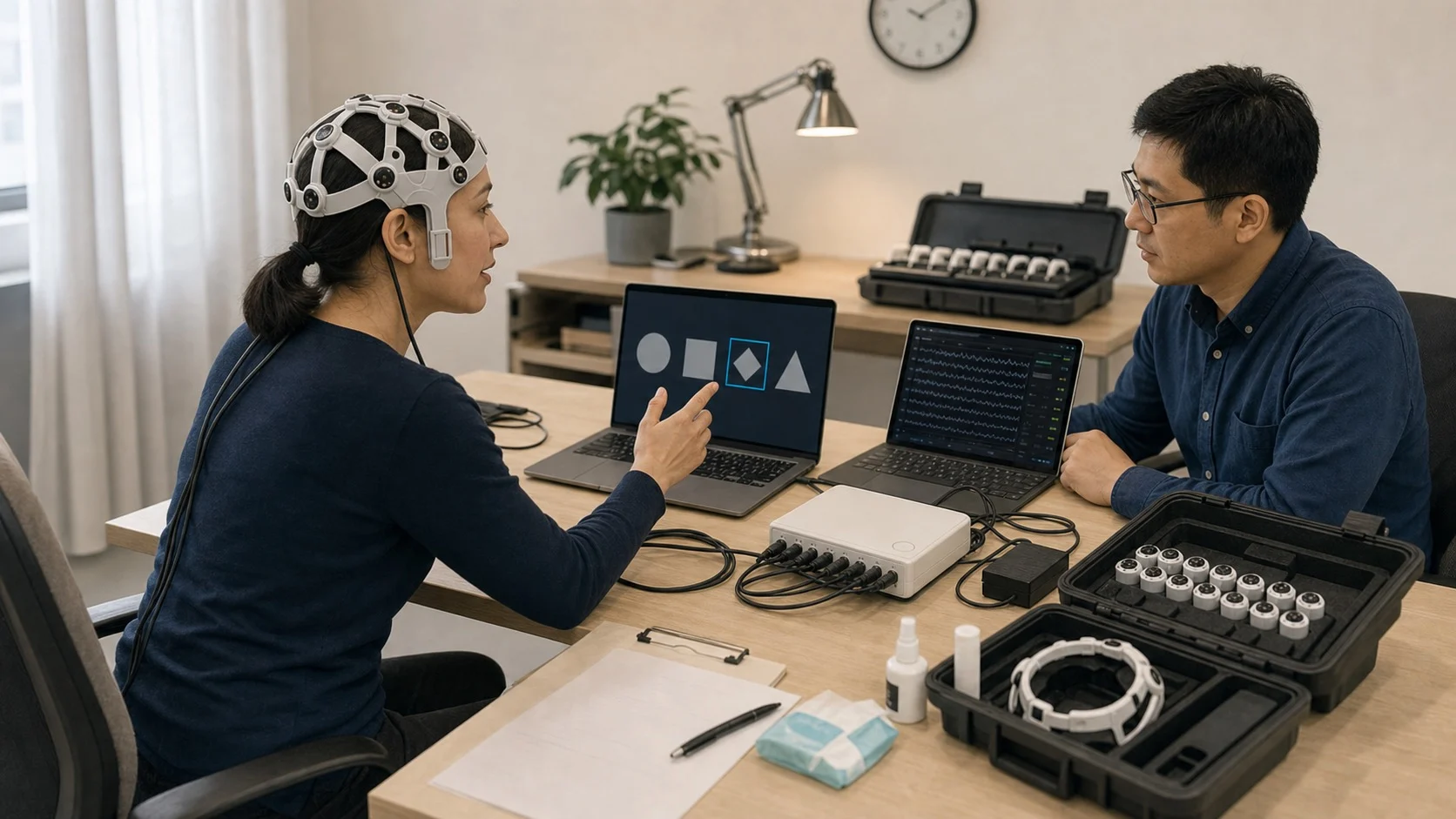
At this stage, assumptions acquire owners.
The earlier study’s dependence on careful setup becomes a training requirement and a protocol condition. Its unstable performance after repositioning becomes a monitoring rule. Its narrow population becomes an eligibility boundary. The idea that a therapist will remain “in the loop” becomes a division of labour, with time, authority, and escalation attached. Responsibilities that were advisory during development become conditions of permission.
Both bodies approve Relay’s investigation. But those approvals remain bounded. They do not establish that Relay may be sold for routine care, that a hospital should buy it, or that a payer should reimburse its use. They permit a defined study under a defined arrangement. If the device version, purpose, population, site, or safeguards change materially, those approvals cannot simply travel under the project name.
A dependable service — or not
Relay’s investigation supports its restricted intended use. The next attachment is still not a larger copy of the protocol. The manufacturer assembles a body of product and operating evidence: intended-purpose and performance claims, conformity and change-control material, instructions and training, maintenance and support arrangements, procurement evidence, and plans for monitoring the device in use.
The institutional distinction is important in Switzerland. Swissmedic explains that medical devices do not undergo the official authorization procedure used for medicinal products. Market access depends on the applicable conformity-assessment procedure, and Swissmedic’s role includes market surveillance. Its market-access guidance states that the applicable conformity assessment must be completed before a device is placed on the market or put into service. Calling this simply “regulatory approval” would collapse a real change in process and responsibility.
Relay completes the applicable conformity-assessment process. But its hospital still has a different decision to make. During the investigation it was a research site operating under a protocol. In this case, a joint procurement and clinical-governance group now receives the product and operating evidence. It must decide whether the restricted use can be sustained within the hospital’s staffing, scheduling, IT, maintenance, and incident processes. The therapist’s judgment is no longer protected by a research team standing nearby. Calibration time now competes with appointments. Replacement caps and software support become continuity questions. A useful capability can still fail this local service decision if the arrangement needed to reproduce it cannot be sustained.
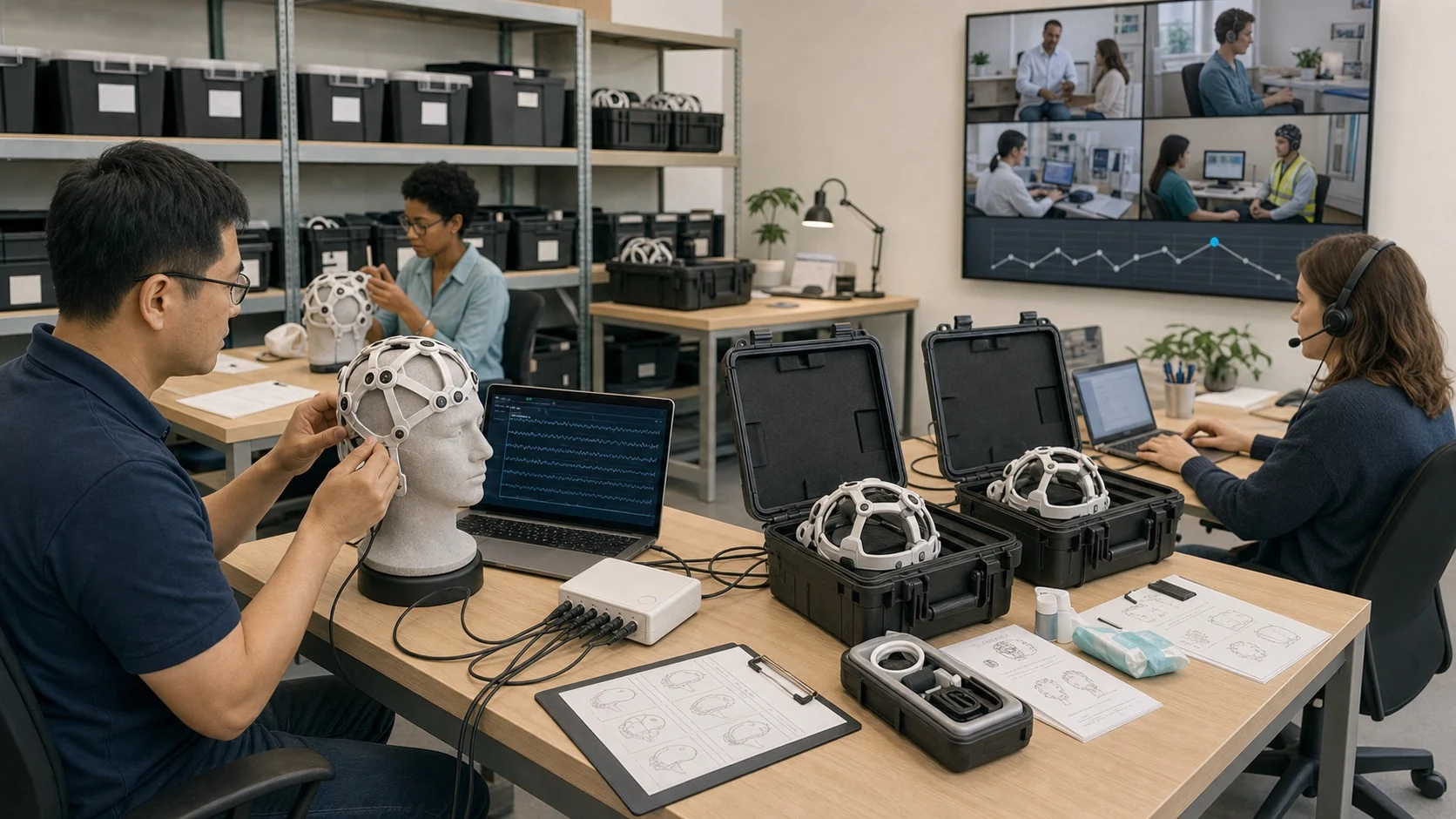
Responsibility does not pass like a baton from laboratory to company to hospital. The manufacturer remains responsible for the marketed device’s conformity, quality system, post-market surveillance, and required corrective action. The hospital must govern the conditions of local use: staff preparation, maintenance, vigilance and escalation, and the way Relay’s output enters care. Any ongoing support commitment depends on the product and contractual arrangement. Clinical leaders remain responsible for treatment decisions. Researchers remain accountable for the claims made about the earlier study. Procurement can require evidence and service commitments, but it cannot turn a result from one configuration into proof for another.
Routine use makes Relay look stable. But at scale, the small changes become the system. A software update alters a filter. A supplier changes the electrode cap. A clinic shortens calibration to fit its schedule. The service expands to a population that was poorly represented in the investigation. Each change can affect whether the original evidence still supports the current claim, even when the interface looks the same to its users.
The records needed to govern Relay therefore have to evolve, but they do not form one universal vigilance file. The manufacturer needs product-version, post-market-surveillance, and corrective-action records; the hospital needs training, maintenance, local-vigilance, and incident-reporting records. Support failures, access patterns, and outcomes across sites may also need to be followed for service governance. Swiss medical-device vigilance makes this institutional in a concrete way: professionals who notice a serious incident must notify the supplier and Swissmedic, while hospitals need an internal reporting system and a registered vigilance contact. The manufacturer and the operator see different parts of a failure. Dependable service requires both to act without pretending their responsibilities are identical.
The clock would look different on another route. A consumer team with a technically similar system might be preparing product claims, privacy terms, customer support, platform agreements, and an online release while the clinical team is still assembling investigation and conformity evidence. A workplace team might need a pilot agreement, labour consultation, managerial- access rules, procurement evidence, and enforceable limits on how neural data or inferences can affect workers. Comparable prototype evidence does not make the institutional duties arrive together.
Eventually, Relay may be withdrawn, replaced, or absorbed into another service. But responsibility does not switch off. A clinic may still need to communicate with patients, preserve or delete data under the applicable rules, offer continuity of care, and retain records relevant to later incidents. After a manufacturer stops selling a device, applicable record-retention, vigilance, and corrective-action obligations may continue, as may contractual support commitments. End of use is another change in the arrangement, not a return to zero.
The project called Relay has persisted. But the object being decided has not. An institution that sees only the latest attachment sees too little. It needs to know which earlier conditions still support the present claim, which duties have persisted or moved, who can act now, and what change should force a new decision. Otherwise the stable project name lends false continuity to a system whose evidence, authority, and consequences have all changed.
Responsible development therefore depends on institutional continuity across changing authority. Each later decision must know what its present claim legitimately inherits, what requires fresh evidence or permission, and which duties still have owners. A technology may change route, scope, or institutional home. Responsibility must change visibly with it.
BCIs make this problem vivid because one named project can pass through science, clinical research, manufacturing, and care. The same institutional problem appears wherever an experimental capability becomes infrastructure. As use becomes ordinary and distributed, responsibility cannot become anonymous: it must remain attached to people and institutions with the authority to act.