
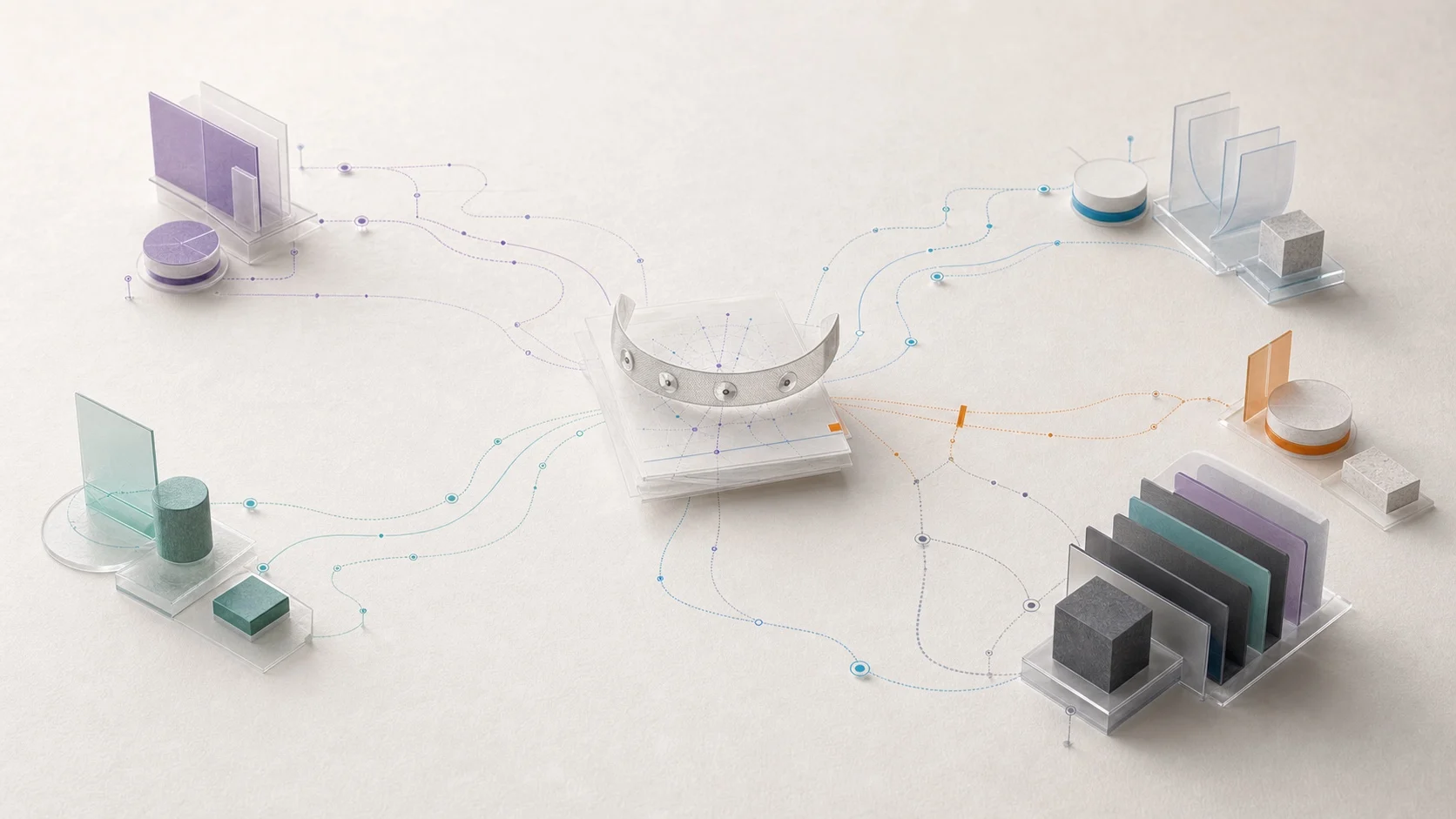
The startup team came into the room full of confidence and fear. They started pitching their non-invasive brain-computer interface: A headset that detects patterns associated with attention and fatigue. The research conducted with the device is early, but the signal appears useful. The team describes an initial study with volunteers, followed by a clinical partnership for people whose conditions affect alertness. The same capability might eventually support consumer wellbeing, occupational safety, or integration into a larger health platform. The young CEO commented ecstatic about the potential of addressing multiple markets.
But the equally young analyst in the room saw it also from a different perspective: To the institutions around it, these are different decisions. A research study asks whether the signal can be measured reliably and whether participants understand what is being collected. A clinic however, asks whether the inference contributes to meaningful care, who interprets it, and what happens after an error. A consumer protection agency would raise questions about claims, secondary data use, and whether users mistake an estimate for a diagnosis. Used in a workplace setting, the signal enters a relationship where another person can assign tasks, withhold opportunity, or decide whose account is believed. Following the headset through these possible settings shows what changes along the way: the evidence required, what counts as benefit, who pays, how the data may be reused, and who remains responsible as the system grows.
The first place in which the potential futures start to hide is often the project descriptions and grant proposals.
It's easier to describe an object than the future
Technical proposals are good at describing components and systems: sensors, electrodes, signal processing, models, interfaces, and performance metrics. They are easy because they are right there on the table. The arrangements those components may enter are more difficult to describe because they deal with intended, but still hypothetical, futures. Who will use the system? Who will buy it? Who receives the inference? Which decision will the output influence? Can the person refuse? What support keeps the system usable? Which data survive, and which other conclusions may later be drawn from them?
And while these questions can look external to the technology, they are not. A local-processing choice can limit later data uses or make them easier. A calibration procedure can keep a system inside specialist care or shift work onto users and families. A revenue model can reward a company for improving individual benefit, selling organizational visibility, or retaining data for future products. The architecture, service model, and business model are already shaping which pathways will be easier to enter. A clinical investigator expressed the distinction elegantly:
A proposal that describes only the device has described the starting point, not the future being authorized.
The problem is not that teams should anticipate every future use. They cannot. The problem is over-indexing on the stated use and ignoring the nearby pathways, which could be more plausible —and potentially interesting— because of today's choices. That difference first becomes visible when a result from the lab is used to support a clinical claim.
A research result does not prove a clinical service
Suppose an early study shows that the headset can identify a signal under a defined protocol. That is real and useful evidence. But it supports a bounded claim: under these conditions, with this population, protocol, equipment, and research team, the signal could be identified. Those conditions are part of the result, but a research protocol supplies an unusual amount of invisible support. Researchers position the equipment, repeat calibration, recognize degraded signals, exclude unusable sessions, interpret ambiguous outputs, and call the right engineer when something fails. The performance number remains visible in the paper. Much of the operational support that made it possible does not.
Moving into clinical use does not invalidate the research result, but it asks it to support a larger claim. Can an ordinary clinic reproduce the measurement across the intended population? Does it contribute to an outcome that matters to patients? Can staff explain uncertainty and respond to errors? Who owns training, maintenance, updates, interpretation, and escalation?
The FDA’s guidance for implanted BCI devices clearly distinguishes non-clinical testing from feasibility and pivotal clinical studies. The categories are specific to implanted devices, but the underlying principle is broader: evidence is tied to a stage, use, population, and setting.
Hence, when a project team considers a new application (for any reason, but for startups it’s often due to pressure related to capital), it doesn’t merely have to think about where the technology is used. The shift in pathway changes what the evidence must establish: The result may travel without significant changes, but the claim it can support does not automatically expand with it into different domains.
Clinical, consumer, and workplace benefit might be technically adjacent, but are not the same claim
The startup's headset, like any device, produces the same kind of output in any pathway: a time-stamped estimate that fatigue is stable, rising, or high. But what counts as benefit changes with the area of application.
In rehabilitation, a therapist might use a rising estimate as one reason to
pause an exercise or change its intensity. The relevant claim is not simply
that the classifier is accurate. It is that using the estimate helps a patient
complete therapy more safely or effectively. A false high alert could interrupt a useful session; a false low alert could encourage staff to continue when the patient needs to stop. The patient’s own report remains part of the decision.
In a consumer application, the same estimate might appear as a daily “focus score” and trigger a suggestion to take a break. The immediate consequence of an error may be small. But the label can imply more certainty than the underlying inference, while months of raw EEG recordings and scores create secondary uses that the original study never examined.
In a workplace setting, a logistics company might send a high-fatigue alert to both a forklift driver and a supervisor. The purpose — preventing an accident — may be legitimate. The alert can also determine who continues a task, who loses paid time, and whose explanation is believed when the score and lived experience disagree. Consent operates differently when refusing the headset carries a predictable disadvantage. A worker-rights and privacy interview put a pathway change this way:
Expansion from wellness into work is not ordinary market growth; it changes the power surrounding the same signal.
Technical accuracy remains important in every setting. But accuracy cannot answer who may act on an inference, whether the person can challenge it, or what happens while its meaning is disputed. Who gets to use the score often depends on a less technical question: who pays for the product.
Business models are pathway decisions
The decision of changing or expanding in another domain can be scientific, clinical, or ethical, but often it is commercial.
What is the largest market? Who is the buyer? Which outcome determines renewal? What data create future value? Is support a continuing obligation, a premium service, or someone else’s cost? Does the organization benefit when the system remains narrowly useful, or when the inference expands into more decisions?
These choices do not prove bad intent. A viable business model may be necessary for manufacturing, maintenance, clinical support, security, and access. But it also creates incentives that can outlast the founding team’s promises. A tool purchased by an individual is optimized around one relationship. A service purchased by an employer, school, insurer, or platform is optimized around another. The buyer’s objective begins to shape the metric, interface, retention policy, and roadmap. An interview with a translation consultant made the point directly:
The first pathway decision may look like a commercial detail: who buys it, which outcome counts, and what the business is rewarded for learning.
Responsible assessment therefore cannot treat the business model as a neutral container around the technology. It is part of the mechanism by which one future becomes easier to build than another. Among business models, there's one in particular that promises high returns. It's when a company stops selling the headset for one type of use and starts making the device output available to many services.
When an estimate becomes infrastructure
The platform pathway begins when the signal — the fatigue estimate in our example — is no longer used only by the wearer, researcher, or clinician. Suppose the startup allows a broader health platform to store each estimate alongside sleep, activity, treatment, and scheduling data. A rehabilitation application uses it to adjust a session. A consumer application recommends a break. Another service retrieves the same field when deciding whether someone is ready for a safety-critical task.
Each integration may appear close to the original use. Together, however, they change the role of the output. A bounded estimate produced for one purpose has become a portable variable about a person and that portability can create legitimate benefits: People may avoid repeated calibration, clinicians may see changes over time, and support may continue across sites. But the original study did not establish whether combining the estimate with other data improves these downstream decisions. Nor did it test whether different users interpret the score consistently, what happens when they disagree, or how an error propagates across connected services.
A platform also separates changes to the model from the decisions that depend on it. If an update shifts the threshold for “high fatigue,” several applications may begin acting differently while continuing to display the same familiar label. Responsibility now includes versioning, access, correction, deletion, and the ability to identify which decisions relied on which model. At that point, the device has not merely reached more users. Its inference has become infrastructure. This creates a natural progression:
- Business model
- Platform reuse
- Architectural lock-in
- Scale and —potentially— distributed responsibility.
Whether the device's output can travel this way depends on choices made much earlier: whether raw data are kept, whether records are linked to a person, and whether other systems can retrieve them. These choices may be easy to make and much harder to undo.
Early choices can make later boundaries expensive
Some pathways remain reversible for a long time. Others begin to lock through ordinary design decisions. For instance, continuous raw-data retention creates different future options from local, event-level processing. Identity-linked histories make secondary inference easier than anonymous aggregate patterns. A model designed for specialist interpretation travels differently from a score designed for rapid organizational action. A support system built around one expert site is not the same service as one designed for distributed use. None of these choices guarantees misuse. They change the cost of restraint.
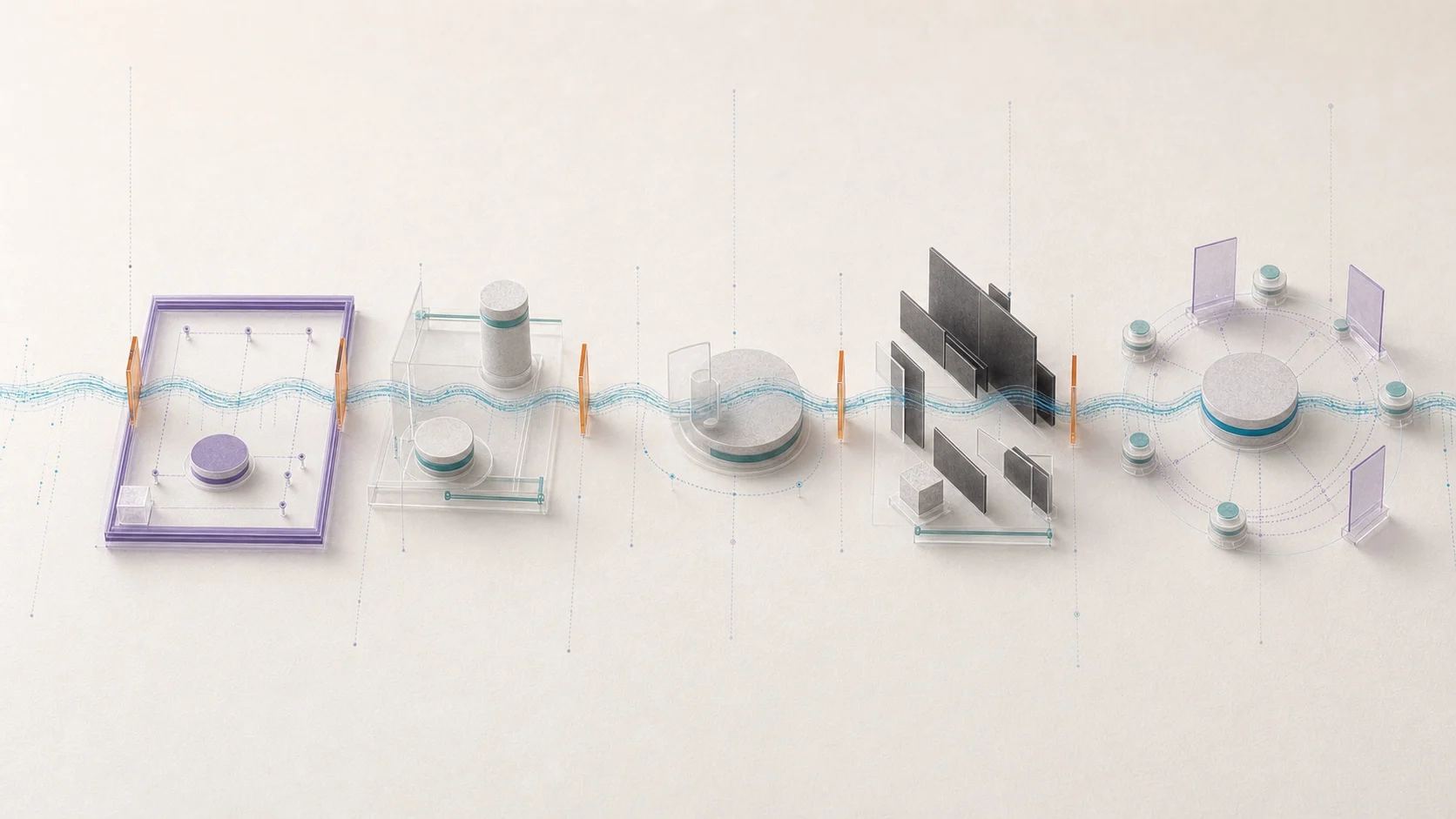
Once a dataset exists, a platform is integrated, customers depend on a metric, or users rely on continued service, reopening the pathway becomes harder. Technical dependencies become contractual expectations. A pilot becomes a procurement standard. A provisional inference becomes part of a person’s record. Those commitments become harder to manage as the product reaches more people, sites, and organizations.
Scale redistributes responsibility
A product that starts being successful faces a new challenge. While scale is usually presented as more of the same —more users, more sites, more data, lower unit cost—, but in practice, scale changes also how responsibility works.
A small research team can recognize individual circumstances. A larger service needs categories, defaults, queues, escalation rules, and contractual boundaries. A specialist can explain uncertainty in person. A platform may compress it into a notification. A direct relationship between participant and investigator can become a chain involving a manufacturer, cloud provider, clinic, employer, insurer, or application developer.
Expansion may make a valuable technology available to people who could never reach the original laboratory. It can also distribute support across organizations that each own one part and none of the whole.
The NIH BRAIN Initiative’s work on continuing trial responsibilities shows why this matters for implanted neural devices: access, maintenance, support, explantation, and medical care may continue after a trial, while responsibility is shared across several professional actors. A pathway that widens access without carrying support forward can turn scale into a transfer of work and risk. As a participant and advocate for assistive-technology warned:
The important measure is not only whether the system performs in a session, but whether it remains useful when the research team is no longer in the room.
Those comparisons also show that the company is not making the journey alone.
Pathways are not predictions, but they offer useful comparisons
The technology may be novel, but many of its institutional pathways are not. Clinical decision support, workplace monitoring, consumer wellness,… most likely there's a precedent and someone walked that path before. But what is most interesting, someone has walked the adjacent path as well. This means that the information to anticipate what could happen if a startup changes pathway from wellness to workplace is out there. And for all the other possible cases alike, enabling a clear discipline supporting responsible innovation — a discipline of conditional questions: Pathway Thinking.
If this use moves into the home, which support becomes necessary? If the buyer changes, does consent still carry the same meaning? If raw neural data are retained, which future inferences become possible? If the model, population, purpose, or consequences change, which evidence no longer answers the question? Which boundary should trigger a new decision rather than inherit the old one? Keeping track of the likely adjacent pathways at each progression of a startup's maturity is not simple. What makes it even harder, is that it isn't only up to the company. Other technologies have already moved from research into clinics, workplaces, and platforms, and their experience offers useful points of comparison.
No one actor controls the next step
No single actor controls the pathways from research to market. Funders, regulators, research institutions, buyers, and infrastructure partners each make decisions that alter which future becomes easier to build. Despite an institution rarely deciding the final destination of a BCI proposal, it decides which study to fund, which claim to permit, which architecture to support, which dataset to create, which partnership to enter, which users to include, and which conditions must survive the next handoff. Those choices do not determine the future, but they change its shape.
A responsible decision should therefore record the pathway it is actually judging, the adjacent pathways it has considered, which uses remain outside the authorization, and what change would force the question open again. It should ask whether a safeguard travels when the buyer, setting, scale, or business model changes. It should make visible when an apparently continuous technical project has become a different social arrangement.
No institution has to start from scratch. This is a complex undertaking and there are several instruments that provide support. The OECD Recommendation on Responsible Innovation in Neurotechnology places anticipation, inclusivity, stewardship, and monitoring across the innovation process. The UNESCO Recommendation on the Ethics of Neurotechnology similarly treats context, purpose, target group, accountability, and the whole technology lifecycle as material.
These recommendations and frameworks show what responsible decisions should pay attention to. They cannot tell a funder, regulator, or hospital what to do with this particular headset. That still depends on the use being considered, the people affected, and what would cause the decision to be reconsidered. By the same token, these frameworks make anticipation a shared responsibility as they cannot decide which pathway a particular proposal is already enabling. That work begins when general principles are translated into conditions, boundaries, and review points attached to a concrete decision.
A project proposal is not one future. It is a set of doors, some already easier to open than others. The next step in governing emerging neurotechnology is not to predict which door will be used. It is to examine the plausible pathways early enough that institutions can still decide which doors should remain open, which require conditions, and which should not be allowed to lock behind the people who will carry the consequences.