

Casey Harrell uses signals from his brain to talk with his family. He has ALS, which has made his speech difficult to understand. An experimental brain–computer interface, or BCI, helps translate his attempted speech into words. Researchers at UC Davis describe him using the system at home to communicate, work and operate his computer.
One of the improvements was especially consequential for daily life. Earlier, a researcher had to be there to set the system up. Later, Harrell could use it without that help. Being able to communicate had become being able to communicate on his own terms.
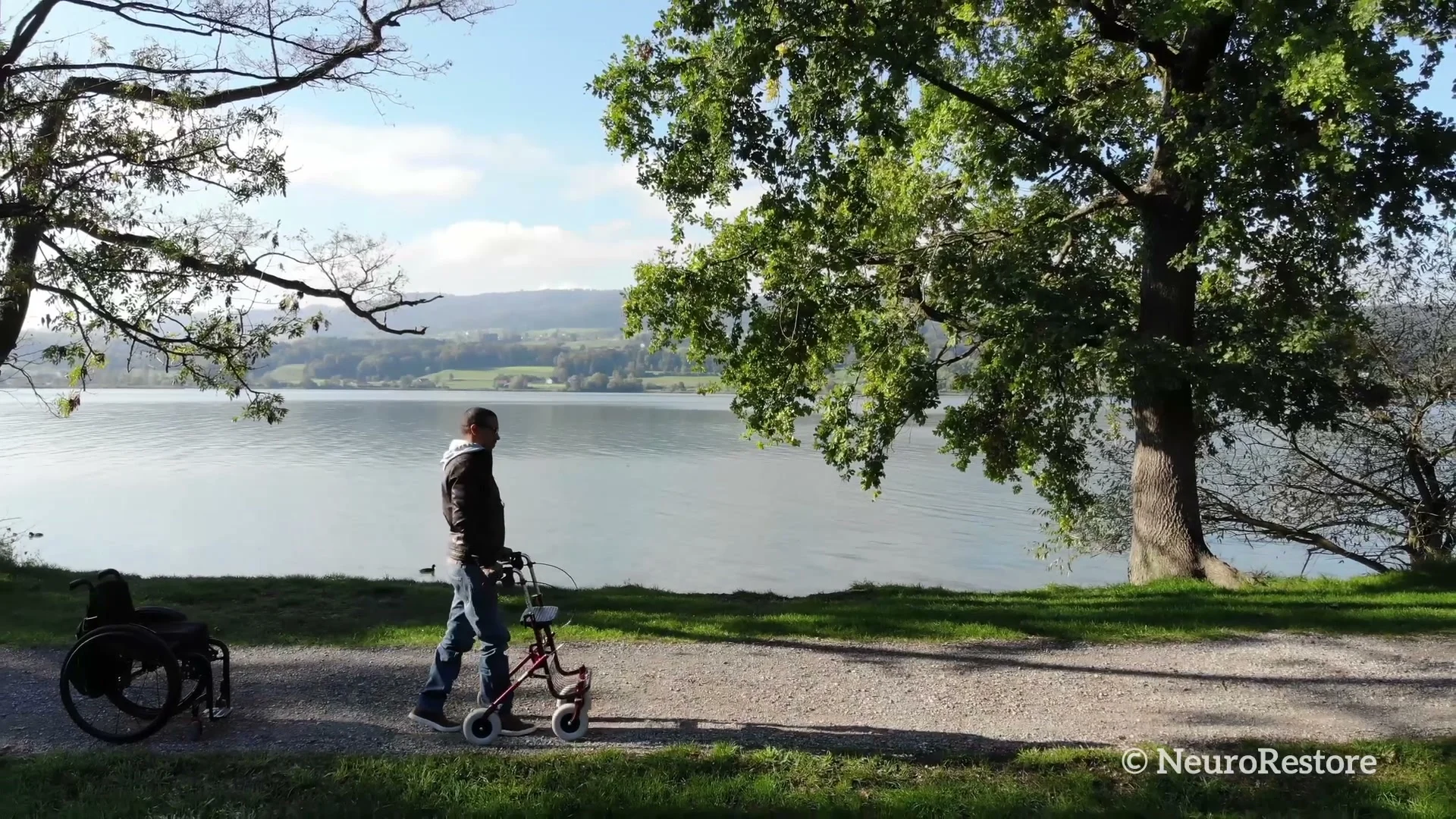
These are the kinds of possibilities we celebrate in the GESDA Compass launch film: speaking with family, standing up, walking outdoors. They also invite us to look beyond the moment of the breakthrough. What would allow more people to benefit? What should researchers work on next? What needs to be in place around the technology?
We built the GESDA Compass to help people find their way through those questions. It brings scientific evidence, people’s needs and public responsibilities into a digital platform that can be approached from several directions. You might arrive with something you want to make possible, a project you are developing or funding, or a question about where the field is heading.
While there is still time to change course
“How do you not rush in and regulate and govern too soon in a way that might stifle technological development?” asks Prof. David Winickoff of the OECD. “But how do you avoid being too late, doing something kind of all the way at the end of the pipeline?” By then, the choices you hoped to influence may already have been made.
It is harder to judge that timing if you have not heard from the people who will use the technology. Dr. Nataliya Kosmyna of MIT and Google is emphatic: “I can never, never, never stress enough how important it is to actually talk to your patients, talk to the families, talk to people who will use your technology.” They may notice something that changes what a team should be trying to achieve in the first place.
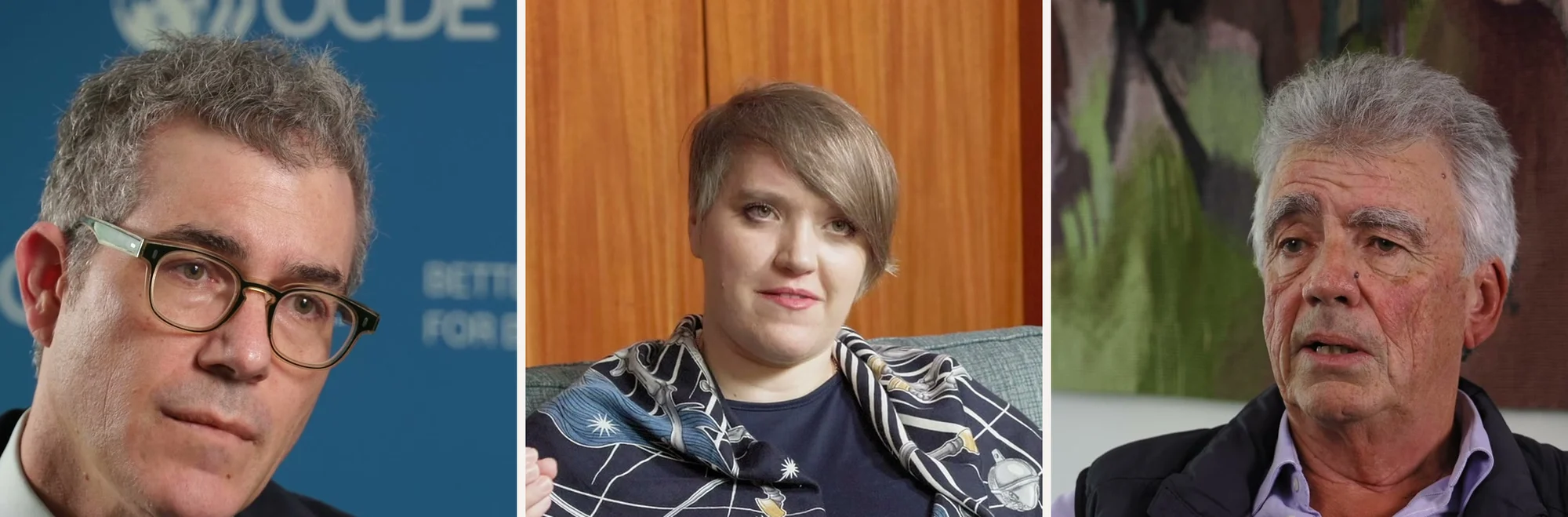
For Prof. Patrick Aebischer, a member of the GESDA Board, bringing people into a conversation is only a beginning: “you need more than just meetings of scientists and policymakers, you have to have a method.” A question raised in that room should be something people can investigate afterwards, with evidence they can examine and reasons they can explain.
An ordinary concern can lead a long way into the science. Wanting to speak privately, for instance, may raise questions about who operates the equipment, where the data goes and what a study has actually tested. The Compass helps people follow those questions through its 3 modules: EXPLORE, ASSESS and MONITOR.
Compass EXPLORE starts with what matters to you
Keeping up with a lively family conversation asks something different of a system than composing a message at your own pace. So does speaking to someone in private, with nobody else operating the equipment. Before choosing a technology, it helps to be clear about what you want it to let you do.
Compass EXPLORE gives you somewhere to begin that inquiry. You can work through what you want to do, what already helps and what a new option would require. Published cases give you examples to examine. Alternatives, including approaches that do not use a BCI, remain part of the discussion. The result can be a brief to take into a conversation with a care team or others helping you investigate the possibilities.
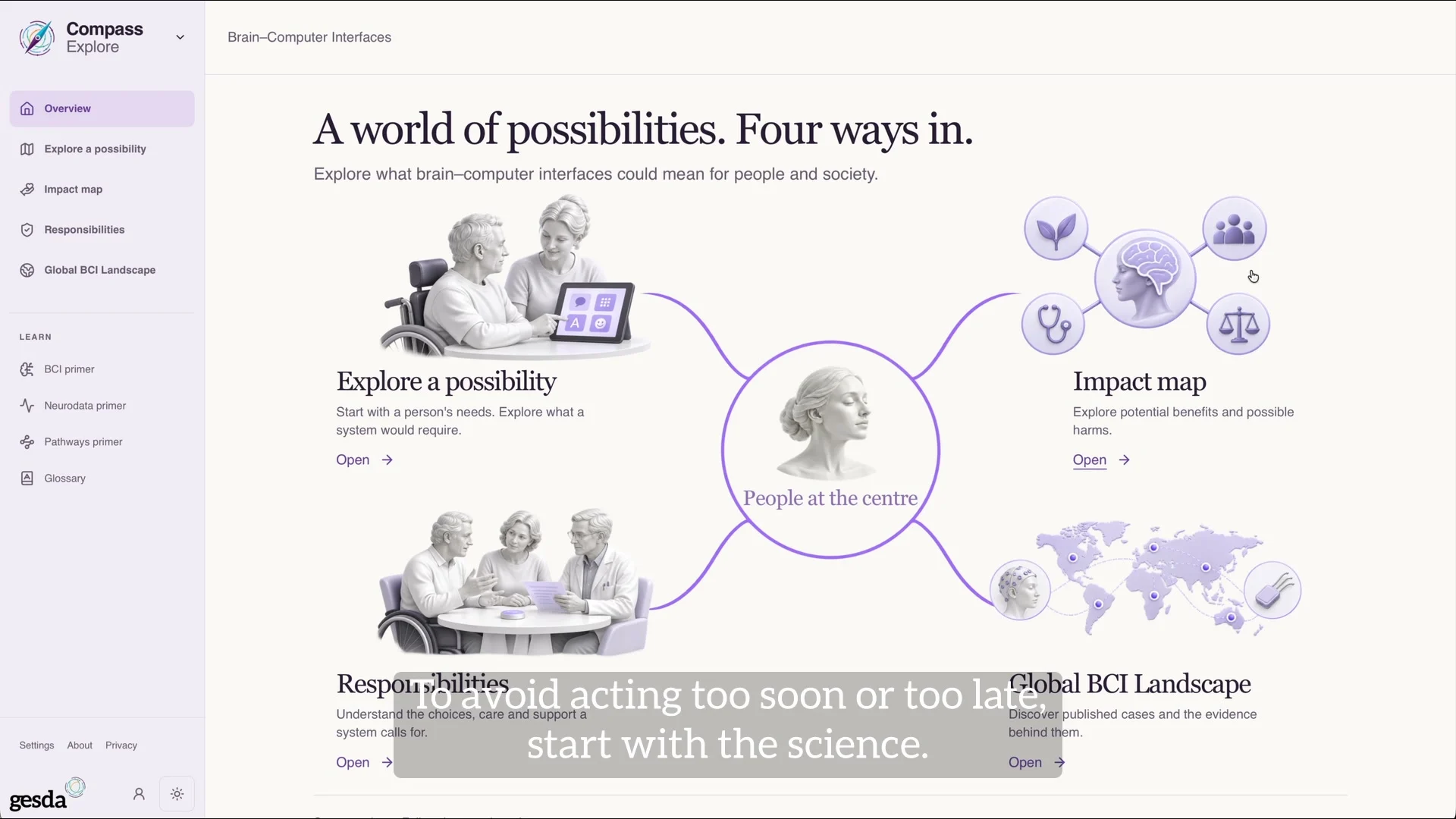
There is room to ask what could happen beyond the intended use, too. A capability developed to help one person might be used for a different purpose elsewhere. Understanding the device is only part of understanding what its use would mean.
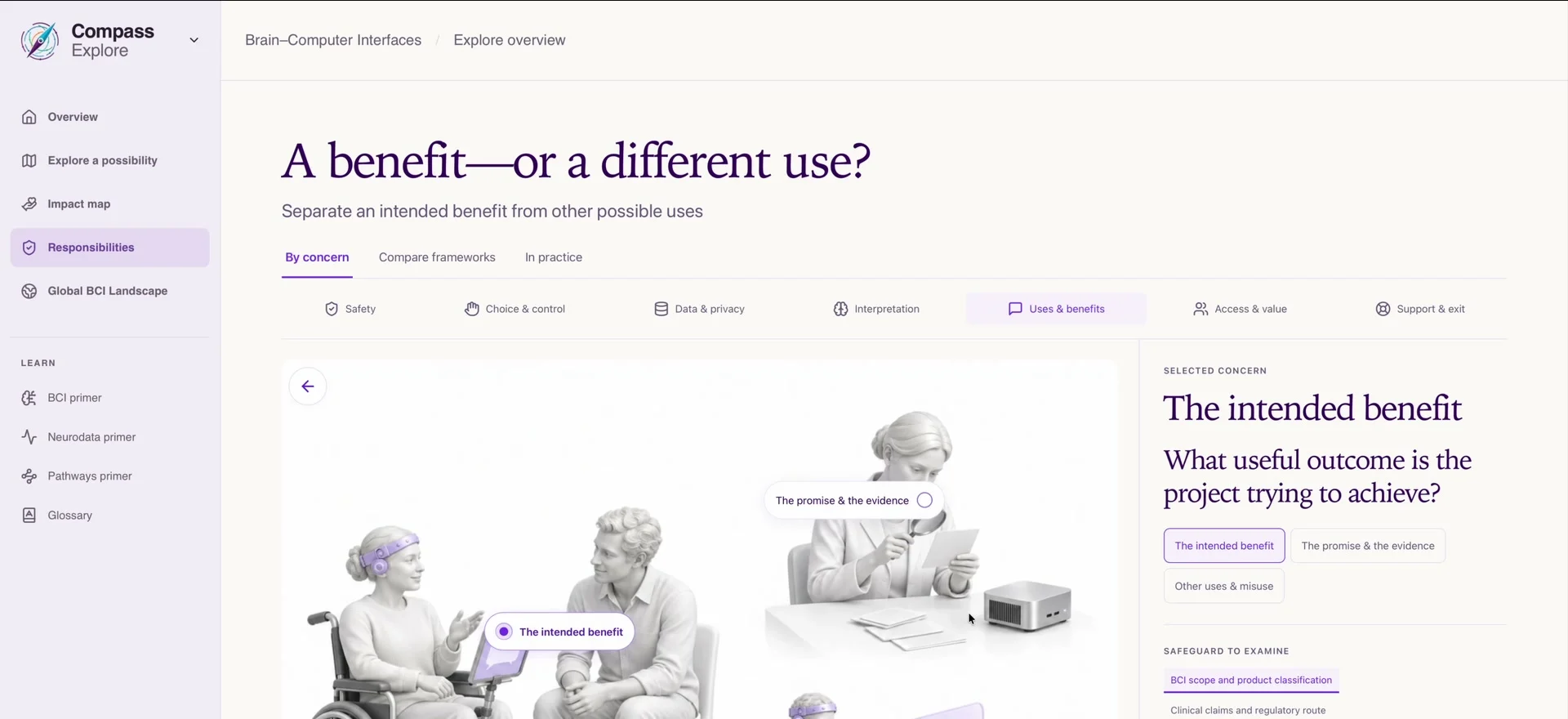
Compass ASSESS asks what a project would need to deliver
The wish to communicate privately could become a useful challenge for a development team. Perhaps a system already works well once somebody else has prepared it. Making preparation easier could then matter as much as improving its speed or accuracy.
For a scientist, that suggests work to investigate, but for a foundation considering a grant, it opens a more precise discussion about what the funding could achieve. While from yet another perspective, the people who would use the system can help establish whether the proposed improvement addresses the difficulty they actually face.
Compass ASSESS helps people examine a particular project with questions like these in mind. It brings the project’s purpose, evidence and unresolved issues into a profile and briefing. Guidance for different responsibilities helps a researcher or funder consider what they need to establish before taking the next step.
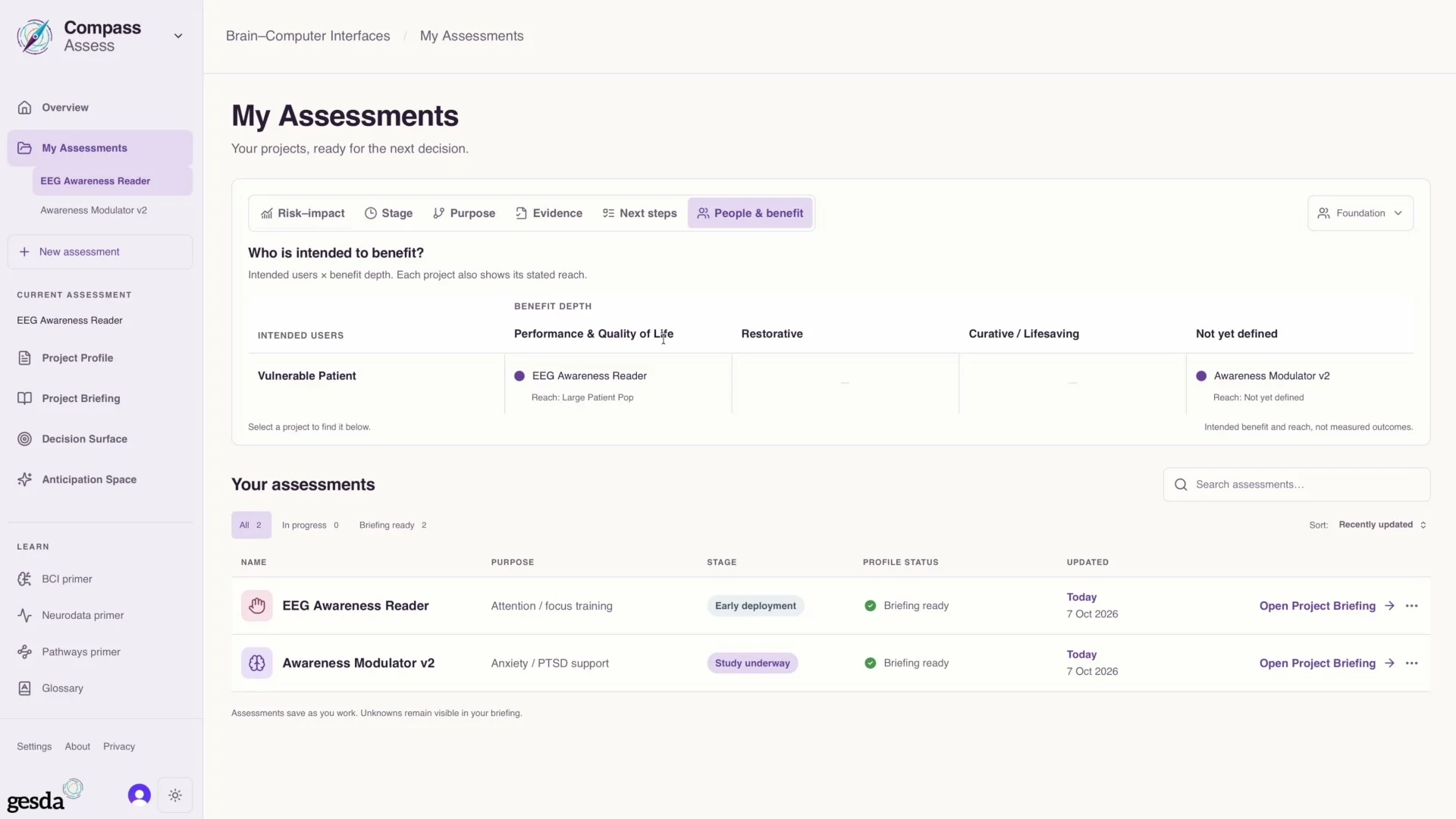
A project may also open possibilities its team has not yet pursued. Within ASSESS, Anticipation Space is based on scientific plausibility informed by GESDA’s science anticipation method: starting from science to examine what could become possible in 5, 10, and 25 years and what it could mean for people and society. For a BCI project, this means looking at what else its capabilities could enable, what further work each use would require, and how the needs and responsibilities of the people involved would change. You can examine why a possible use is plausible before deciding whether it deserves development.
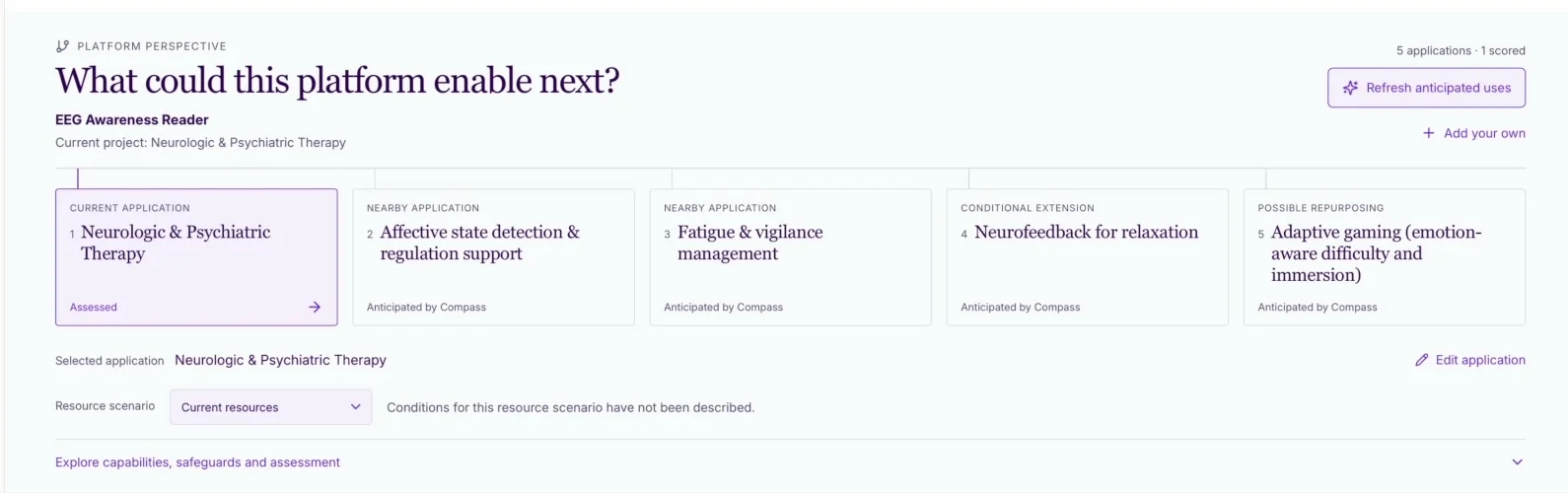
The value is being able to ask about those possibilities early enough to make a difference. A team can consider a useful extension, recognise a concern it needs to investigate or decide that another direction deserves its attention.
Compass MONITOR helps us see what is happening beyond one project
Read a series of promising research announcements and it can be difficult to tell how close any of them is to everyday use. A successful experiment, a clinical deployment and a product people can obtain are different developments, even when the headlines sound similar.
Compass MONITOR lets you examine that wider picture through the public catalogue or a separately authorised portfolio of assessments. The view below makes one useful distinction immediately visible: a project’s stage of development and the evidence of its availability are separate questions.
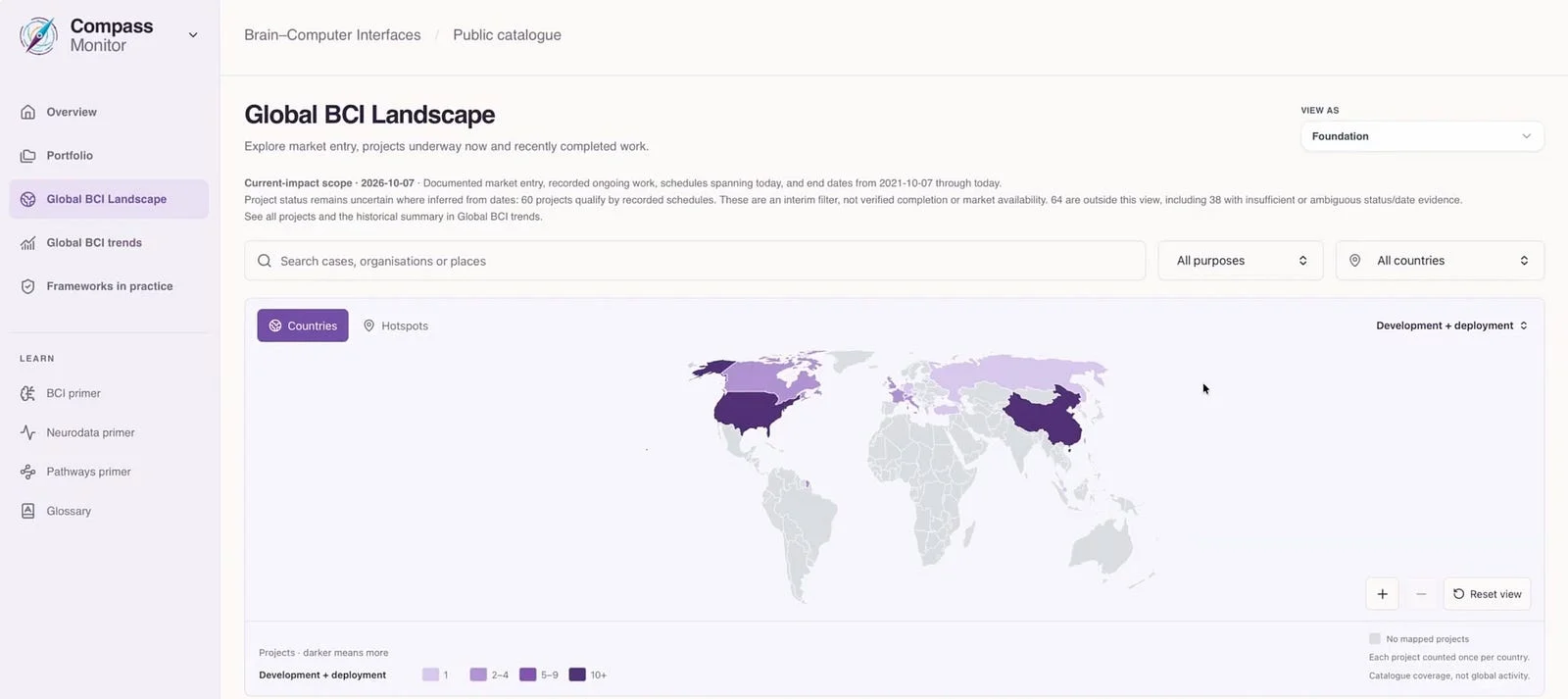
For a public institution, those differences can change what needs attention. An approach still being tested may call for further research. One already in use elsewhere may invite a closer look at how it is provided and who can obtain it. Norm-setters, lawmakers and diplomats need accounts clear enough to tell those situations apart and learn from them.
Monitoring also creates opportunities to learn from what goes well. A service that makes a technology easier to use, or a study that addresses a previously overlooked need, may give others something worth building on. Following a field should help us recognise what to encourage as well as what to examine more carefully.
A place to bring your question
You can arrive at the GESDA Compass with a research proposal to examine or simply a question you have not yet found a good way to ask. EXPLORE, ASSESS, and MONITOR are starting points you can return to as your understanding develops. A published case may first help you make sense of a possibility; later, its evidence may help you think through a project of your own.
Keeping that knowledge useful takes care. Sources need checking, accounts need correcting and uncertainty needs to remain visible. Human curation maintains the shared catalogue. A published case can then inform an exploration, become the starting point for an editable assessment or appear in a comparison with other cases. People retain responsibility for what they conclude and what they choose to do.
This is how the Compass begins to put Responsible Decision Infrastructure into practice: by giving people a way to build on knowledge together, even when they are responsible for different decisions.
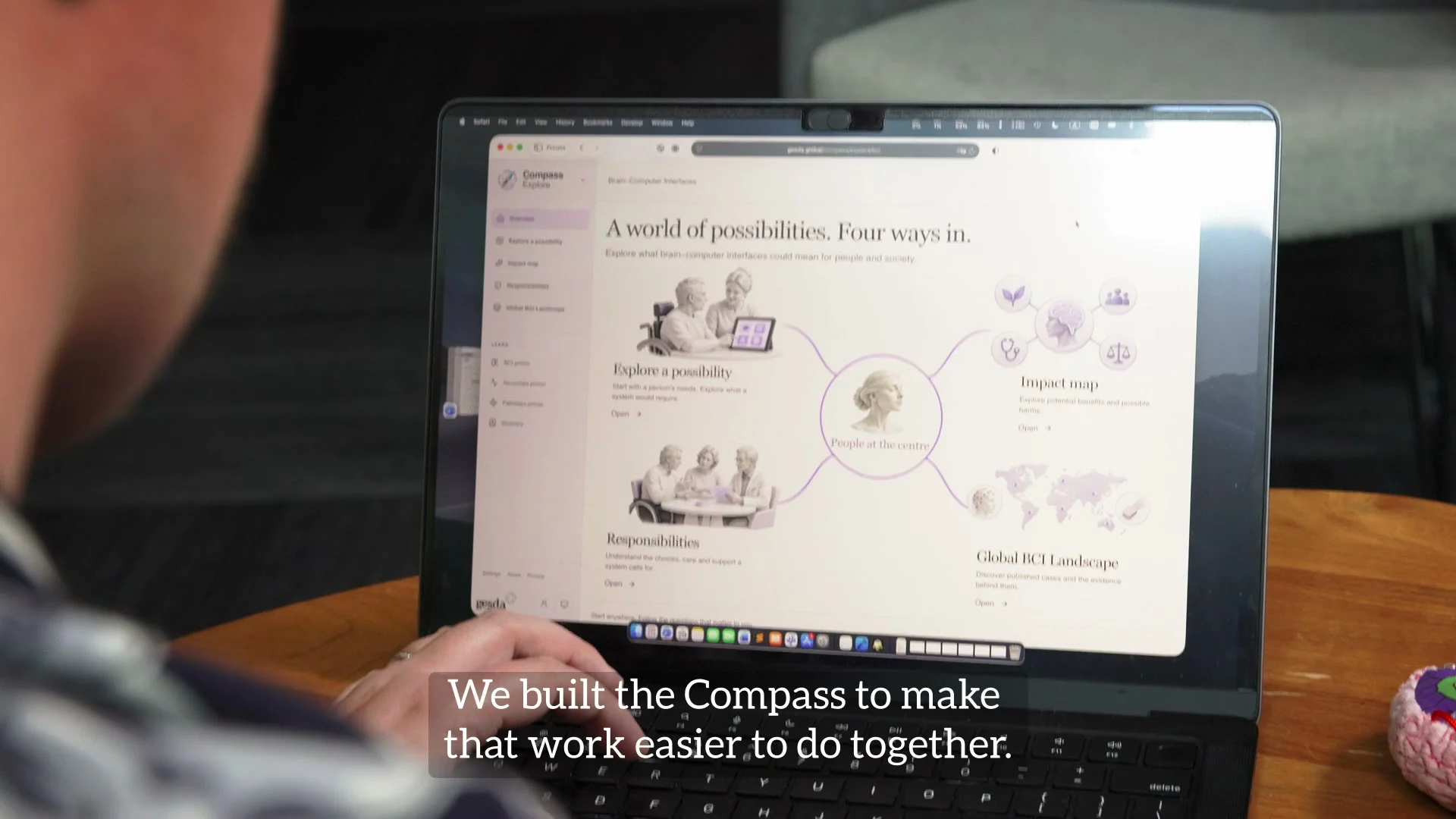
You can visit the GESDA Compass with a question of your own, or watch the complete launch film.
Harrell’s experience gives a simple reason to keep asking those questions. Having a researcher there to prepare a system and being able to use it yourself can both appear under the heading “communication at home.” In daily life, they offer different freedoms. Understanding that difference helps us recognise an improvement worth pursuing — and keeps the person who will live with it in the conversation about what comes next.