Explore how anticipating science enables
solutions that are
out of reach

3 interactive panels on science anticipation and open science in addressing global challenges

Davos · Hotel Europe, Science House See map 19, 22 & 23 January 2026

Why these panels matter

Identify partnerships and frameworks
to change the world through the anticipation of science futures today

Explore how to bring frontier, high-impact scientific thinking into global leadership spaces
reshaping our ability to anticipate and seize global opportunities.

Open Science for Global Challenges

Introducing Frontiers Science House and its mission to bring transformative science to the global agenda. From rapid innovation to geopolitical and geoeconomic decision-making, science can help tackle global risks if the right partnerships and knowledge-sharing frameworks are put in place. ​

19 January 2026 (15:00-17:00) · Plenary room · Add to calendar

Conquering quantum's next frontier

The coming quantum decade could unlock new capabilities for managing highly complex systems, from climate and biological networks to secure communications. The Open Quantum Institute provides a collaborative framework to steer quantum computing applications towards humanity's greatest challenges.In this session, experts in quantum computing will showcase cutting-edge applications and outline what it will take to move from prototypes to real-world deployment.

22 January 2026 (14:00-14:45) · Plenary room · Add to calendar

Restoring multilateralism with science diplomacy

Today's greatest security threats are often rooted in scientific and technological challenges. This session will debate specific, actionable models for deploying anticipatory science diplomacy to stabilize volatile regions,enforce the safe and sustainable use of space, and bridge geopolitical divides using anticipatory frameworks. Join high-level diplomats, scientists, and tech leaders to identify concrete policy levers that make science a verifiable tool for conflict prevention and sustainable global security.

23 January 2026 (10:00-11:00) · Plenary room · Add to calendar

Who are the panelsists?

Meet practitioners who shape tomorrow's technology and policy


Open Science for Global Challenges

Marilyne Andersen portrait

Marilyne Andersen

Director General ·
GESDA


Conquering quantum's next frontier

John Martinis portrait

John Martinis

Professor Emeritus ·
University of California
Nobel Prize in Physics in 2025

Elica Kyoseva portrait

Elica Kyoseva

Director, Quantum Computing ·
NVIDIA Corporation

Nathan Baker portrait

Nathan Baker

Partner, Quantum Applications ·
Microsoft

Amal Karsy portrait

Amal Karsy

Chief of Section for Basic Sciences ·
UNESCO

Barry Sanders portrait

Barry Sanders

Scientific Director Quantum City ·
University of Calgary

Enrica Porcari portrait

Enrica Porcari (moderator)

Chief Information Officer ·
CERN


Restoring multilateralism with science diplomacy

Alexandre Fasel portrait

Alexandre Fasel

State Secretaty ·
Federal Department of Foreign Affairs Switzerland

Josef Aschbacher portrait

Josef Aschbacher

Director General ·
European Space Agency (ESA)

Martin Müller portrait

Martin Müller (moderator)

Executive Director, Science Anticipation ·
GESDA

The intelligence behind the panel discussions

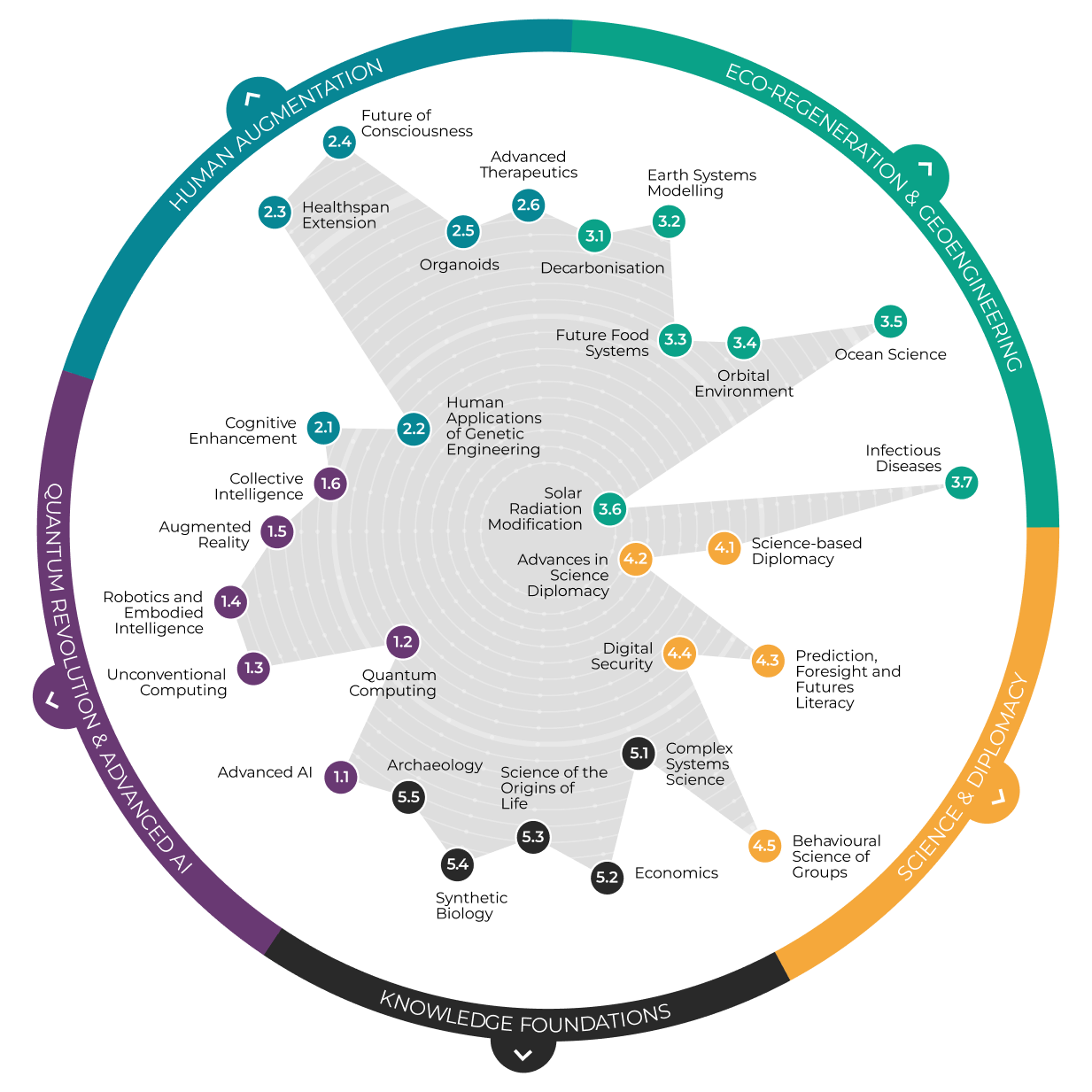
GESDA Science Breakthrough Radar®

The session is informed by GESDA’s anticipatory insight on upcoming scientific and technological breakthroughs with major social impact and strategic relevance.

Science-informed anticipatory insights

The GESDA Science Breakthrough Radar® provides an overview of science trends and breakthrough predictions at 5, 10 and 25 years in 42 science and technology emerging topics, a synthesis of the related fundamental debates and actions in society, and an exploration of opportunities for concerted action through initial contributions on the implications for international affairs, global challenges, and the SDGs.

The Radar helps leaders to:

  • detect weak signals early,
  • interpret their strategic significance, and
  • align national, corporate and philanthropic agendas with credible frontier-science outlooks.

The Radar has already supported key multilateral processes in International Geneva, from a neurotechnology resolution at the Human Rights Council, to the biosecurity implications of synthetic biology, or the applications of quantum algorithms to support the SDGs through the Open Quantum Institute, hosted at CERN.

What's next?

Key details and registration

Session title
Technology, Governance and Science Anticipation
Venue
World Economic Forum Annual Meeting 2026, Davos-Klosters
Date
19, 22 & 23 January 2026
Location
Science House – Frontiers
Format
Panel Sessions
Host
Science House & Geneva Science and Diplomacy Anticipator (GESDA)